
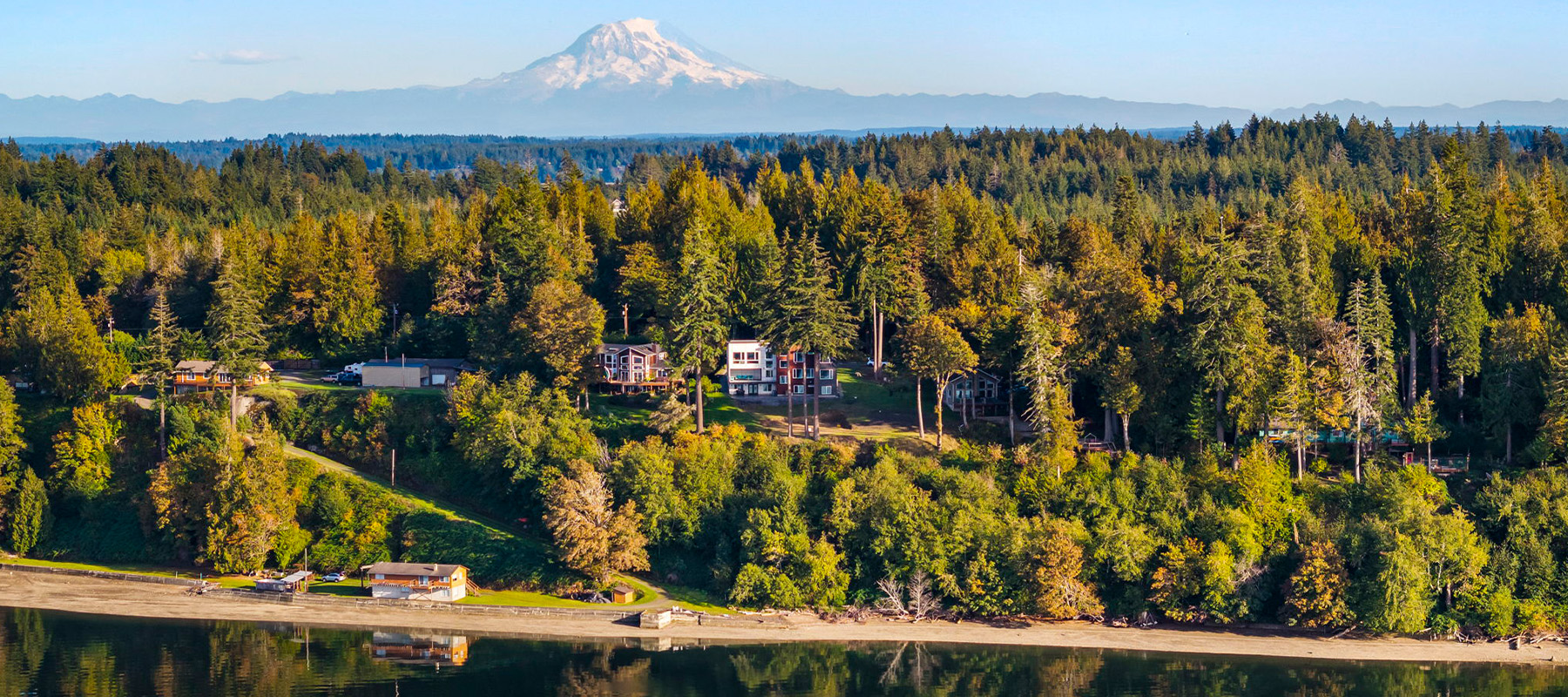
The 2025 Thurston County salt waterfront market tells a different story than the broader housing headlines. Out of roughly 2,300 salt waterfront parcels, only 82 properties changed hands last year (72 homes and 10 vacant land sales) — a modest uptick driven more by sellers listing than buyers rushing in. Days on market climbed 21% (median) and 39% (average), buyers got pickier, and well-prepared properties still outperformed. Meanwhile, long-cycle shoreline policy updates and new state tax changes are quietly reshaping what waterfront ownership will look like in the years ahead. Here’s the full breakdown, co-authored with 30+ year waterfront veteran Spence Weigand.

“Over the past thirty-plus years working along Thurston County’s saltwater shorelines, I have had the benefit of watching this market through many different cycles. What experience has taught me is that the waterfront rarely behaves the way people expect it to behave, especially when viewed through the lens of short-term trends or broader housing headlines.
One of the most meaningful changes I have seen over time has been the gradual tightening of what can and cannot be done along the shorelines. Environmental protections, shoreline setbacks, and zoning standards have evolved steadily. Many waterfront homes were built under earlier rules and now exist as non-conforming properties. That reality shapes ownership in ways that are not always obvious, particularly to buyers encountering waterfront for the first time. These constraints are structural, not temporary, and they influence value, planning, and decision-making far more than most people initially realize.
I have also seen how expectations have shifted as information has become more widely available. Buyers and sellers today arrive better informed, but not necessarily better prepared. Waterfront pricing has never followed a simple formula, and it still does not. View quality, ease of shoreline access, privacy, existing improvements, and orientation all carry weight, and each property expresses those attributes differently. Over time, I have learned that pricing waterfront is less about calculation and more about interpretation. It reinforces the motto I live by: “Pricing waterfront is an art, not a science.”
Another change has been in how preparation affects outcomes. Deferred maintenance, unclear positioning, or unrealistic expectations tend to surface quickly in this market, often with lasting consequences. By contrast, properties that are well understood, thoughtfully prepared, and realistically positioned tend to attract more focused attention, even when overall activity feels subdued. Experience has steadily shifted my advice toward doing more work earlier in the process, not later.
What has not changed is the nature of waterfront ownership itself. Many buyers are not acting out of urgency, and many sellers are not motivated by short-term pressures. Decisions are often shaped by lifestyle, long-term plans, and family considerations rather than timing the market. That longer view tends to reward patience, realism, and clarity.
This report is not intended to predict what comes next. Instead, it reflects an effort to provide context around how the waterfront market actually behaves, why it behaves that way, and what experience has shown to matter most over time. My hope is that it offers useful perspective for those who live along the shorelines those considering a move, and anyone who values understanding this market beyond the surface.”
Throughout this report, salt waterfront refers to properties that directly front marine shoreline within Thurston County, including both homes and vacant land where noted. This is a small and highly specific segment of the real estate market, and turnover is rare.
Because of these structural conditions, salt waterfront does not behave like the broader home market. Sales volume is low by nature, inventory remains limited regardless of economic conditions, and properties vary widely in shoreline character, access, orientation, and existing improvements. As a result, common metrics such as median price, price per square foot, or average days on market can be misleading when viewed in isolation.
In markets with few transactions, interpretation matters more than averages. A small number of sales can disproportionately influence annual statistics, making surface-level trends less reliable. Understanding how buyers respond to specific properties, and how well those properties align with buyer expectations, provides more meaningful insight than aggregate data alone.
The data and analysis that follow reflect these realities. Rather than applying assumptions from larger housing markets, this report focuses on long-term patterns, transaction behavior, and structural context to provide a clearer framework for interpreting salt waterfront performance.

Across Thurston County, home inventory remained below long-term norms throughout 2025, even as conditions gradually normalized from the prior two years. Mortgage rates stayed elevated compared to the 2019–2021 period, price appreciation slowed meaningfully from pandemic-era peaks, and homes generally required more time to attract committed buyers. The result was a more measured market climate, with fewer urgency-driven decisions and greater sensitivity to pricing and condition.
Countywide activity reflected this shift. Buyers were more selective, listings took longer to convert to pending status, and price reductions became more common than in recent years. Financing costs and affordability constraints shaped behavior across the region, influencing not only whether buyers acted, but how deliberately they moved when they did.
This broader context helps frame the year without defining individual waterfront outcomes. Countywide trends describe the environment in which shoreline transactions occurred, while the charts and analysis that follow focus specifically on how salt waterfront properties performed within those conditions.

Salt waterfront activity remains structurally limited by the size of the market itself. Across Thurston County, there are roughly 2,300 salt waterfront parcels, and only a small fraction of those properties change hands in any given year. Even in periods of increased activity, annual turnover typically remains near three percent, meaning the vast majority of waterfront properties do not transact.
In 2025, salt waterfront transactions totaled 82 sales, including 72 homes and 10 vacant land sales. This represented a noticeable increase in activity within a very small sub-section of the market. Importantly, the increase occurred even as broader countywide conditions slowed, indicating that the change was driven primarily by more owners choosing to sell rather than by a surge in buyer demand.
Viewed in context, the additional listings that came to market in 2025 were sufficient to raise transaction counts, but not enough to materially alter the balance between supply and demand. This pattern is consistent with a temporary release of inventory rather than a sustained shift in market structure. Opportunity along the shoreline remains defined by scarcity, not volume.


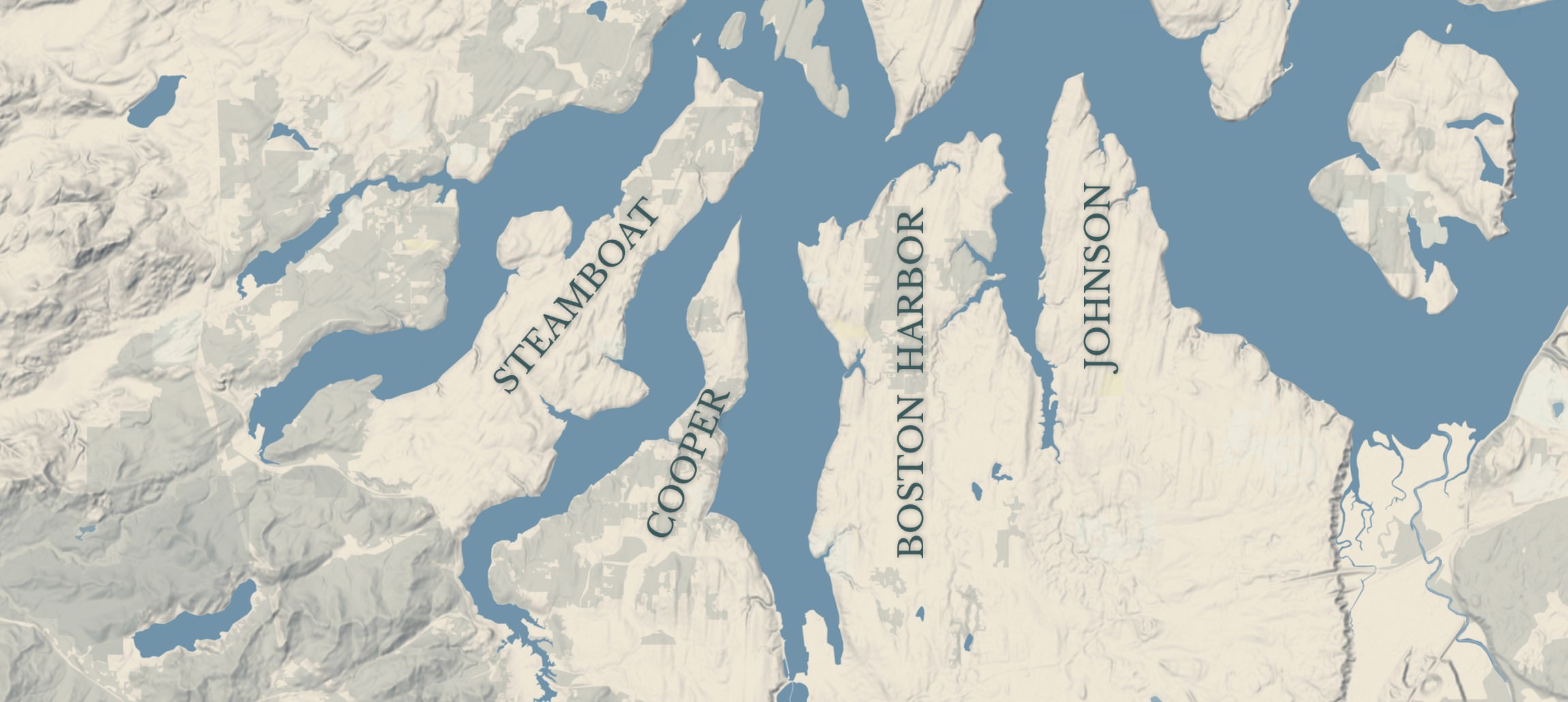
Geography is the primary driver in the salt waterfront market and distinguishes it from broad market summaries. By analyzing individual peninsulas, we reveal how physical traits such as shoreline orientation and access often impact price more than house size or finishes. These comparisons serve to identify patterns of availability rather than ranking quality or desirability. This approach clarifies how specific settings shape buyer behavior and guides localized interpretation.


In the 2025 waterfront market, effective strategy centered on reducing uncertainty rather than creating momentum. With buyers both selective and financially flexible, clarity around pricing, condition, and constraints mattered more than speed to market. Rushing a property to market before it was ready often introduced avoidable risk.
Deferred maintenance emerged repeatedly in 2025 as an underlying factor in transactions that struggled. When unresolved issues were visible early, buyers tended to discount more aggressively or disengage altogether. By contrast, properties that were well prepared and realistically positioned attracted more focused attention, even when broader activity felt subdued.
Taken together, these patterns were consistently visible across 2025 waterfront transactions. Sellers who addressed condition and positioning early tended to preserve leverage and flexibility once interest developed. In a constrained market, preparation functioned less as advice and more as practical risk management.
In 2025, decision timelines lengthened across the salt waterfront market, with median days on market rising roughly 21% year over year and average days on market increasing by approximately 39%. This shift reflected a more deliberate evaluation process, as buyers weighed setting, access, condition, and long-term suitability more carefully before acting.
Rather than reacting quickly to new listings, buyers spent more time filtering opportunities. This behavior was less about hesitation and more about selectivity, as buyers assessed whether a property alignedwith a narrow set of priorities. When properties aligned on key factors, including setting and outlook, buyers who had been monitoring the market were prepared to move decisively.
As a result, 2025 displayed an episodic rhythm. Periods of limited activity were followed by concentrated moments of demand when the right opportunities emerged. This pattern was visible repeatedly throughout the year and helps explain why the waterfront market could feel quiet at times, yet move decisively when alignment occurred.

Throughout 2025, salt waterfront real estate in Thurston County continued to reflect a set of conditions that have proven durable across market cycles. While broader housing narratives shifted over the course of the year, the underlying structure of the waterfront market remained largely unchanged.
Opportunity along the shorelines continued to be constrained by fixed geography and long ownership horizons. Properties came to market selectively, and transaction activity reflected moments of alignment rather than sustained volume. This pattern, visible across decades of waterfront data, remained a defining feature of the market in 2025.
Buyer behavior also remained consistent. Participation was shaped more by long-term intent and discretionary motivation than by short-term financial conditions. Decisions were deliberate, and outcomes varied widely based on setting, access, condition, and alignment rather than broader market momentum. These dynamics were evident throughout the year, regardless of shifts in interest rates or sentiment elsewhere in the housing market.
Value along the shorelines continued to be supported by permanence. Salt waterfront remains a finite asset, shaped by regulation, physical constraints, and the inability to replicate location. While individual transactions in 2025 reflected a wide range of outcomes, the broader foundation of the market did not depend on timing or speculation, but on characteristics that tend to persist.
Taken together, 2025 functioned less as a turning point and more as a reaffirmation. The same structural forces that have long governed salt waterfront real estate continued to do so, providing clarity beneath changing headlines and reinforcing the importance of context and perspective when interpreting activity along the shorelines.

Waterfront outcomes are shaped less by annual policy changes and more by long-cycle planning decisions that unfold over many years. Shoreline regulations are not updated annually. In Thurston County, the current Shoreline Master Program has been in place since the early 2010s, meaning most salt waterfront owners have operated under essentially the same shoreline framework for more than a decade. This stability is intentional and reflects how shoreline policy is designed to evolve gradually rather than through frequent rule changes.
What made 2025 notable was not the adoption of new shoreline restrictions, but progress within one of the more consequential planning cycles in recent years. Thurston County’s Shoreline Master Program remained under review by the Washington Department of Ecology during the year, and Washington State continued a multi-year rulemaking process to update its Shoreline Management Act implementation rules. Importantly, these state-level rule changes are still in development and were not finalized or in effect in 2025. Based on the current timeline, final adoption is expected no earlier than 2026, with local implementation following thereafter.
Unlike many past updates, this rulemaking effort is focused on forward-looking issues that are particularly relevant to salt waterfront, including sea level rise, flood risk, and how shoreline development is evaluated over long time horizons. While these changes are expected to influence future shoreline planning and permitting once adopted, they are not retroactive and do not alter existing, lawful homes or shoreline structures. For waterfront owners, the significance lies less in immediate impact and more in how future shoreline improvements, redevelopment, or permitting may be reviewed in the years ahead.

Beyond land-use policy, 2025 also included statewide tax and estate-related changes that are more likely to be relevant for higher-value property segments, including salt waterfront. Washington adjusted elements of its estate tax structure and capital gains taxation during the year. While these changes do not affect day-to-day ownership or most real estate transactions, they can influence longer-term decisions around holding, transferring, or selling high-equity waterfront property. As with shoreline regulation, these financial changes tend to shape outcomes gradually over time, and homeowners should consult their accountant or tax and legal advisors for guidance specific to their situation.
While 2025 brought no immediate restrictions, the convergence of evolving environmental standards and new fiscal policies has set the stage for a more complex ownership landscape.
There is something truly special about Thurston County’s salt waterfront, and I hope this report gave you a deeper appreciation for the nuances of this unique market. A big thank you to Spence for partnering with me on this year’s magazine. It was an incredible project to bring to life and share with all of you. If you want to chat about what these trends mean for your own real estate goals, or if you’d like to get on the mailing list for next year’s physical copy, drop a comment below or send me a message. I’d love to connect!
There are roughly 2,300 salt waterfront parcels in Thurston County. Annual turnover typically stays around 3%, meaning the vast majority never come to market in any given year. In 2025, just 82 properties sold — 72 homes and 10 vacant land parcels.
A non-conforming waterfront property is a home that was legally built under older regulations but would not meet today’s shoreline setbacks, environmental protections, or zoning standards. These properties are still legal to own and use, but constraints may apply to remodeling, rebuilding, or expanding structures near the shoreline. This is extremely common along Thurston County shorelines and directly affects long-term planning and value.
Thurston County’s current Shoreline Master Program has been in place since the early 2010s and governs what you can build, modify, or maintain near the shoreline. It’s currently under review by the Washington Department of Ecology, and state-level updates are expected no earlier than 2026. New rules will not be retroactive to existing lawful structures, but they will shape future permitting, redevelopment, and shoreline improvements.
Waterfront buyers are highly selective. In 2025, median days on market rose 21% and average days on market rose 39% year over year. Buyers spend more time evaluating shoreline orientation, view quality, access, condition, and long-term suitability before acting. Most waterfront purchases are lifestyle-driven and discretionary, so buyers aren’t rushed by short-term pressures the way they might be in the broader housing market.
Potentially yes, especially for higher-value waterfront property. Washington adjusted elements of its estate tax and capital gains taxation in 2025. These changes don’t affect everyday ownership, but they can influence long-term decisions around holding, transferring to heirs, or selling high-equity shoreline property. Waterfront owners should consult an accountant or estate attorney for guidance specific to their situation.

Spence Weigand is Thurston County’s leading waterfront property specialist, with over two decades of experience in the South Puget Sound market. As the publisher of OlympiaWaterfront.com and founder of the annual Thurston County Waterfront Report (now in its 34th year), he maintains the area’s most comprehensive database of waterfront transactions and market trends. A South Sound native and active community member, Spence has completed over 500 waterfront transactions throughout his career. When not analyzing market data or helping clients, he can often be found exploring the same waterways.